
Classter Advanced Documentation
The full walkthrough of the Classter Consumer API: how to authorise, how to read a call, and how to execute your first request. If you only need the reference link and credentials, the short version covers that in a minute.
Step one — How to start using the Classter Consumer API
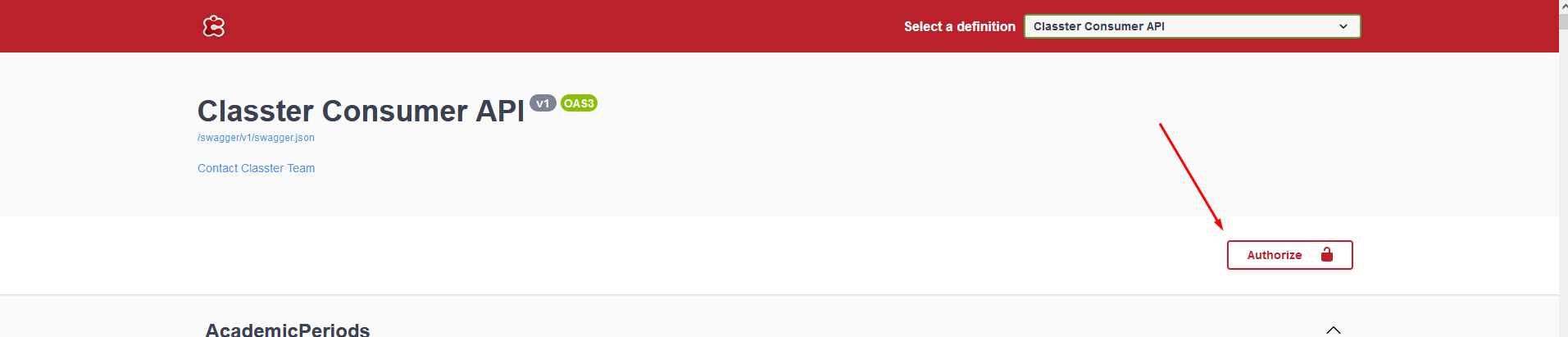
Section titled “Step one — How to start using the Classter Consumer API”After visiting consumerapi.classter.com and signing in, the first thing to do is set the Bearer Token Value: click the Authorize button.
Paste the value you got from our support team and click Authorize.
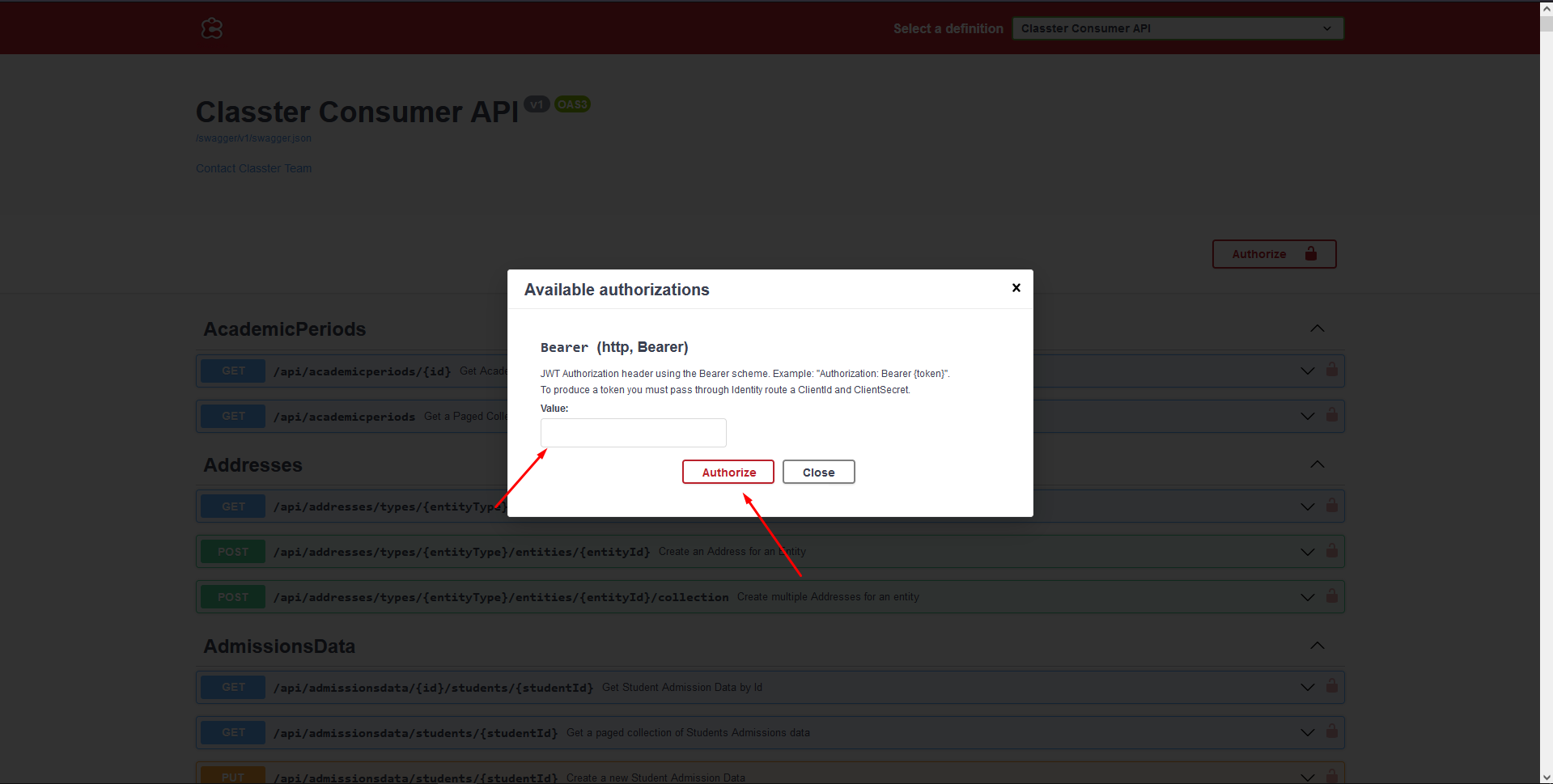
Click Close after pasting the value.
Step two — Basic fields
Section titled “Step two — Basic fields”Clicking the arrow expands and collapses each call.
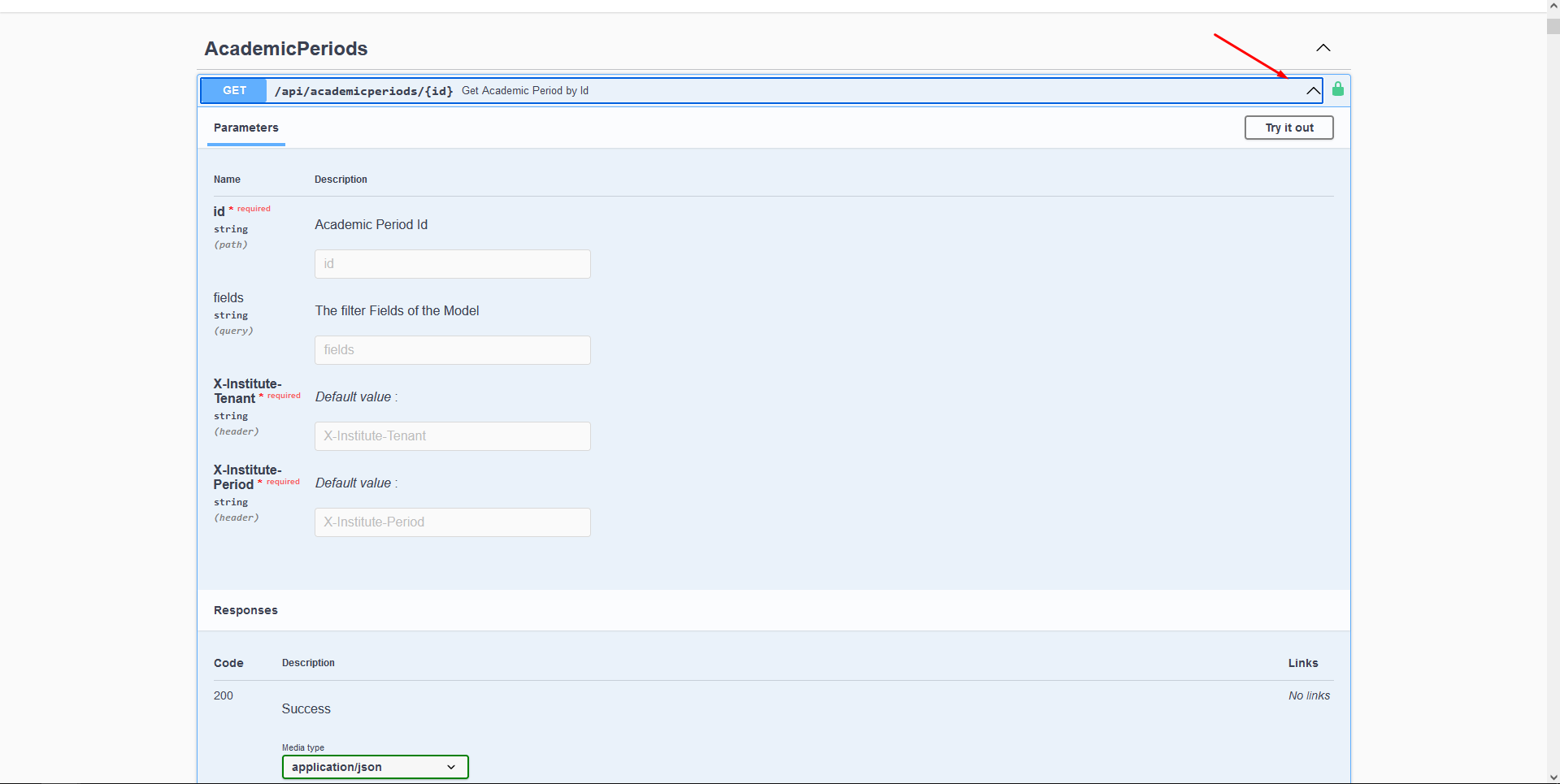
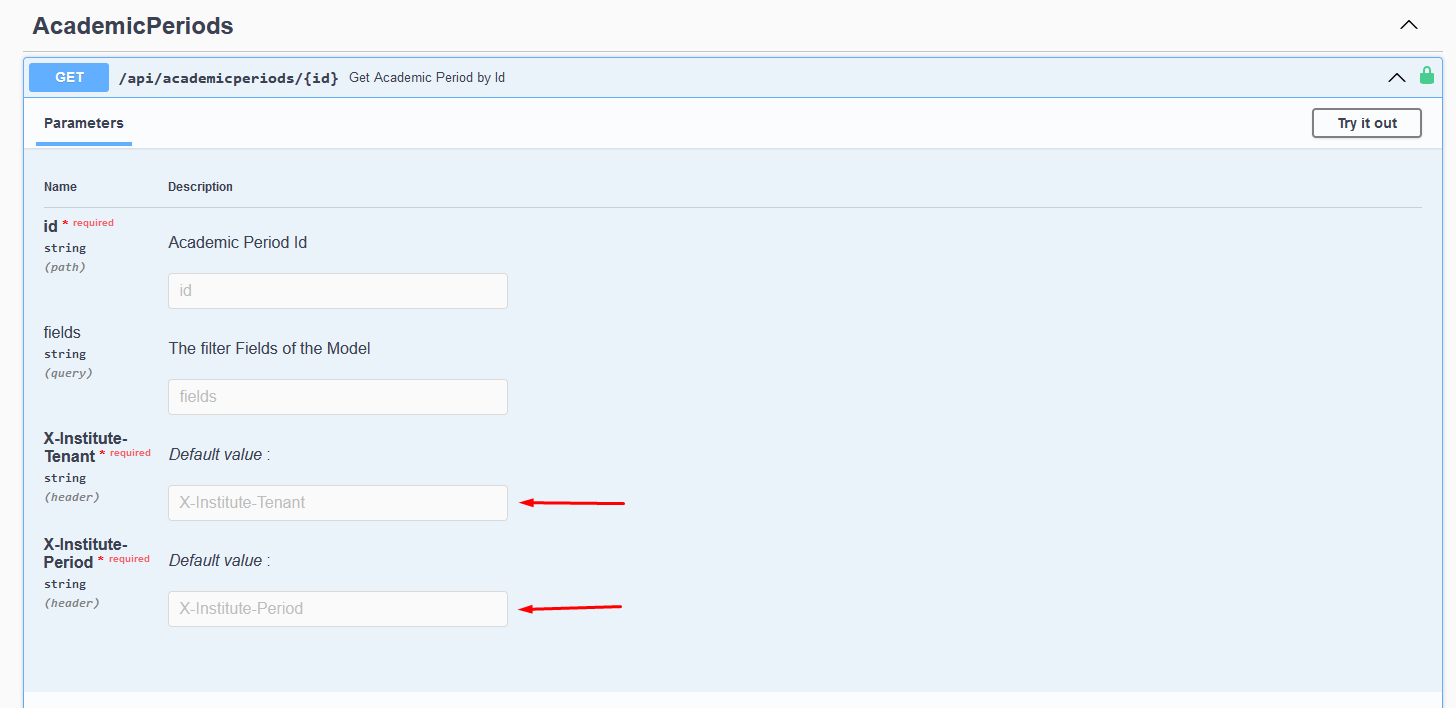
Each call is characterised by its type, its URL and its parameters.
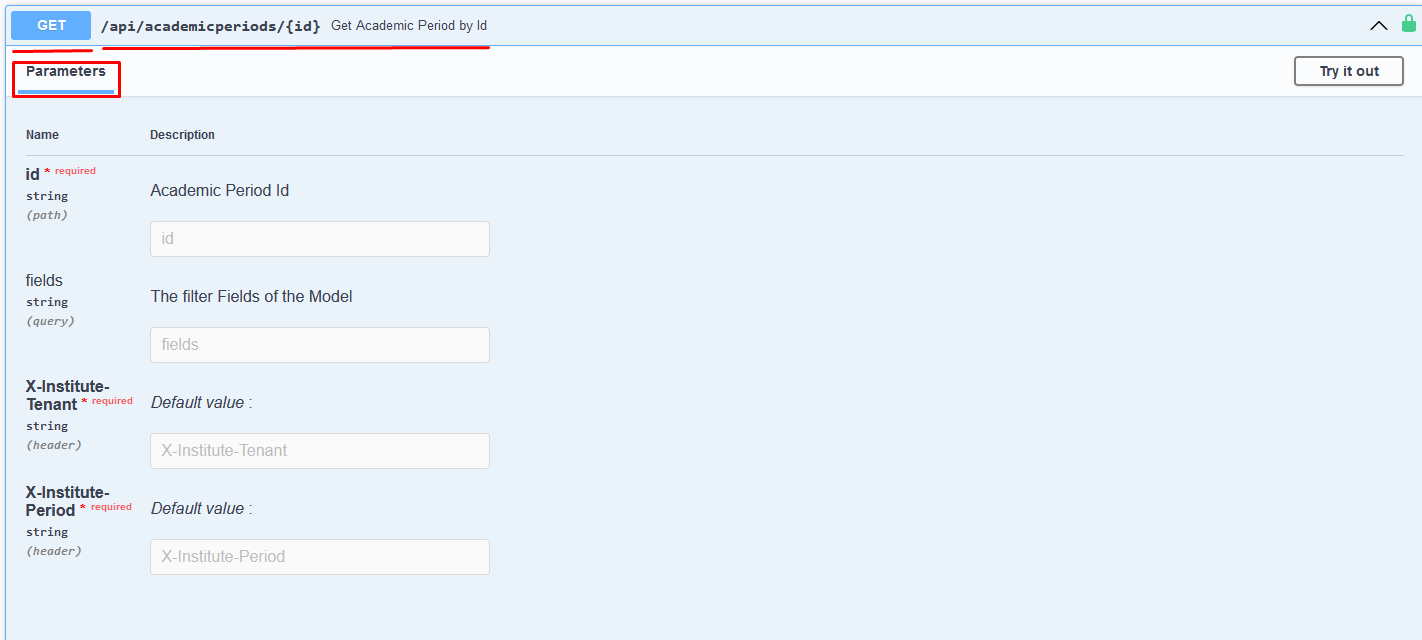
Each call also requires two or more fields:
- X-Institute-Tenant — the unique ID of the institute you are interested in,
e.g.
1ecbf123-e123-4123-b12b-e3c123. - X-Institute-Period — the period you are interested in for that institute,
e.g.
2.
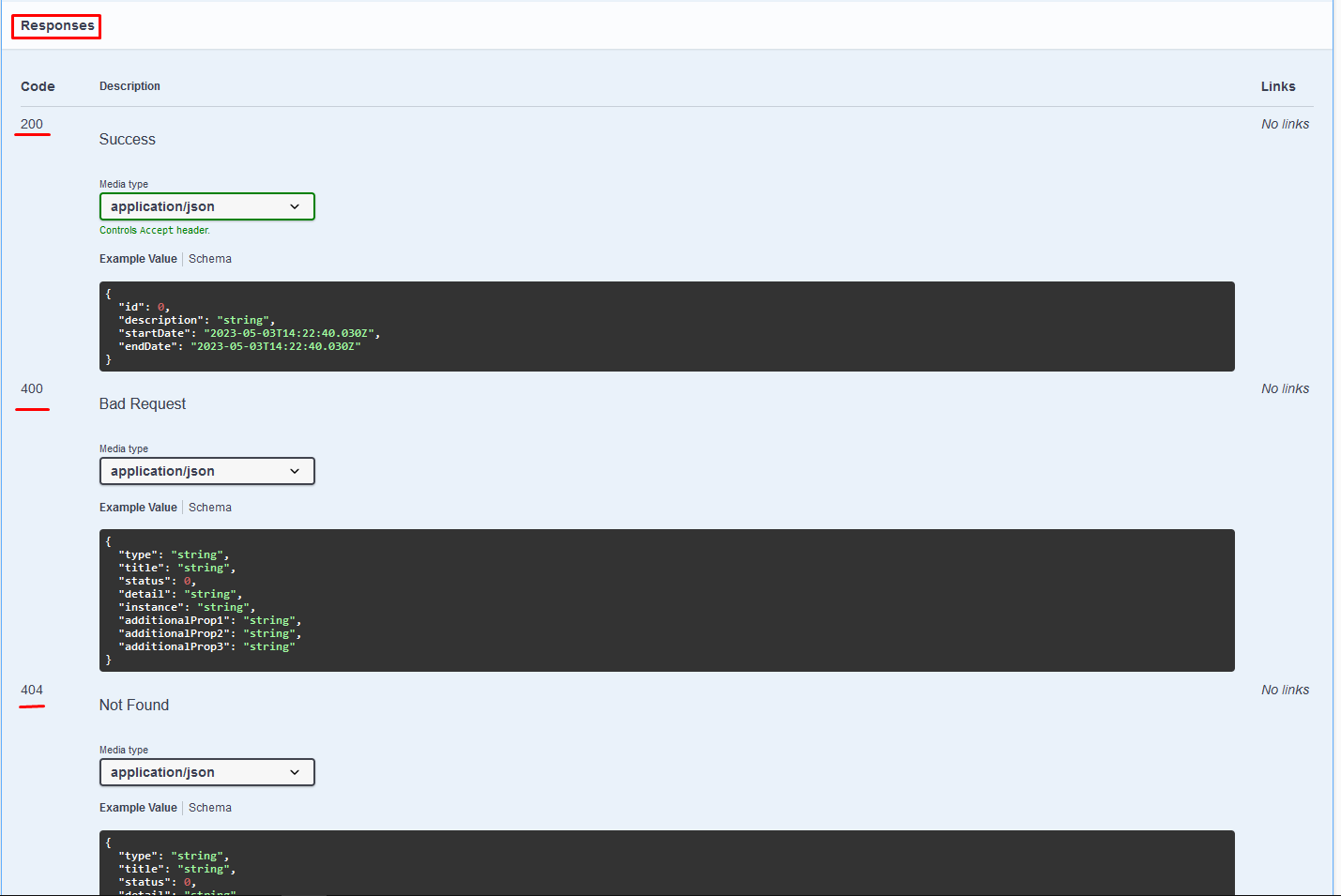
Every call has a Responses section, which you can use as an example of the expected output.
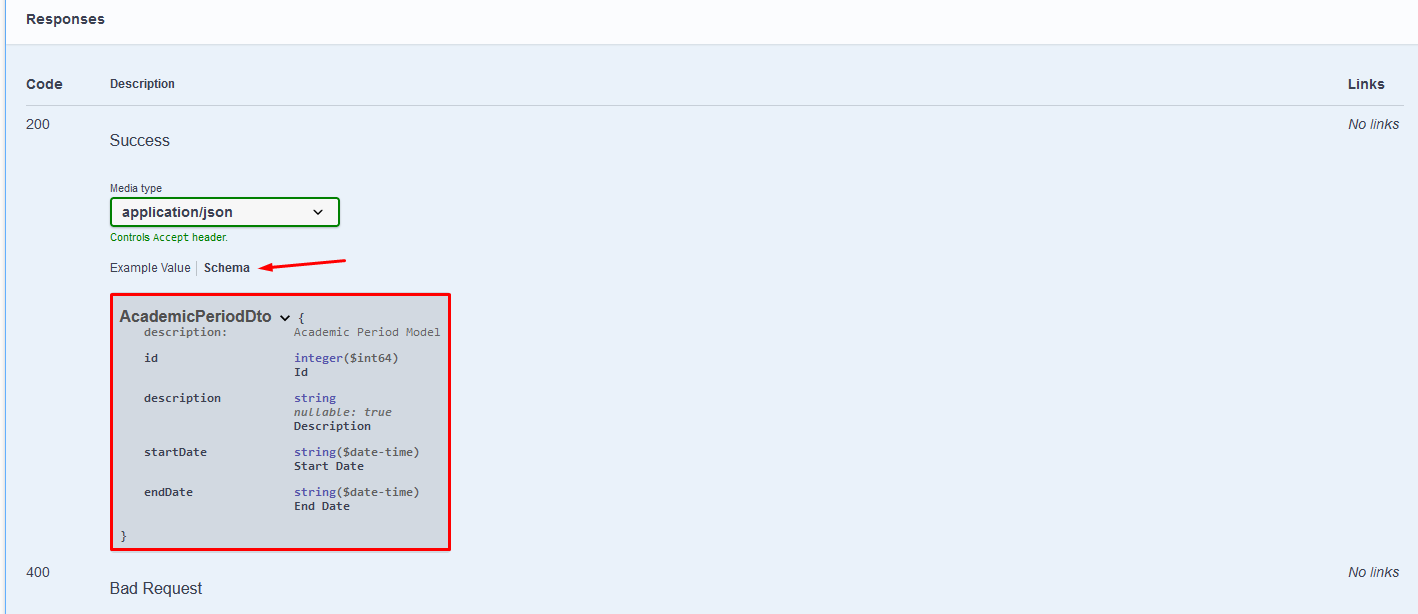
A Schema field is present for every response status code, showing the types the system expects.
Step three — Executing
Section titled “Step three — Executing”Click Try it out, then paste your X-Institute-Tenant and X-Institute-Period into the appropriate fields.
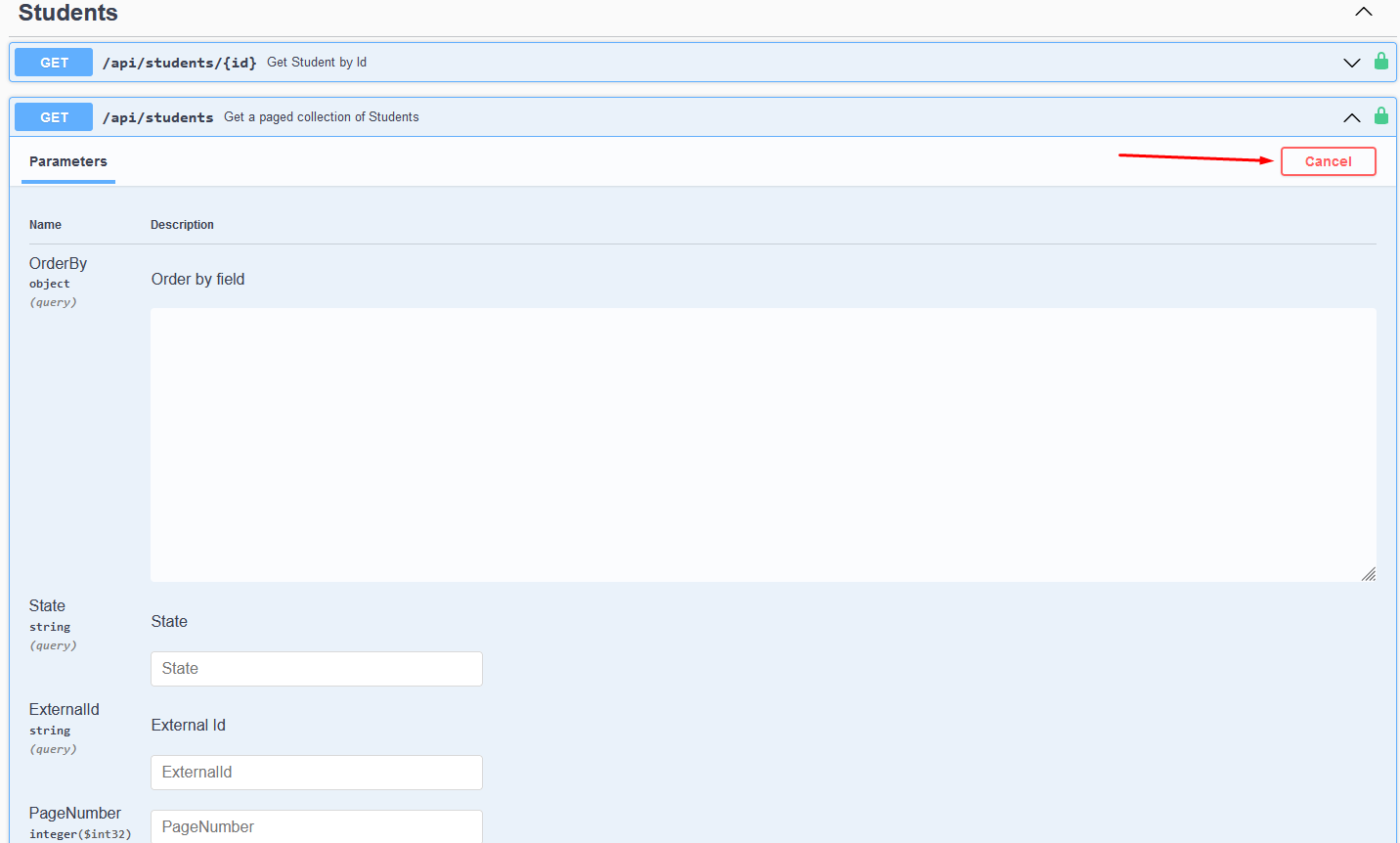
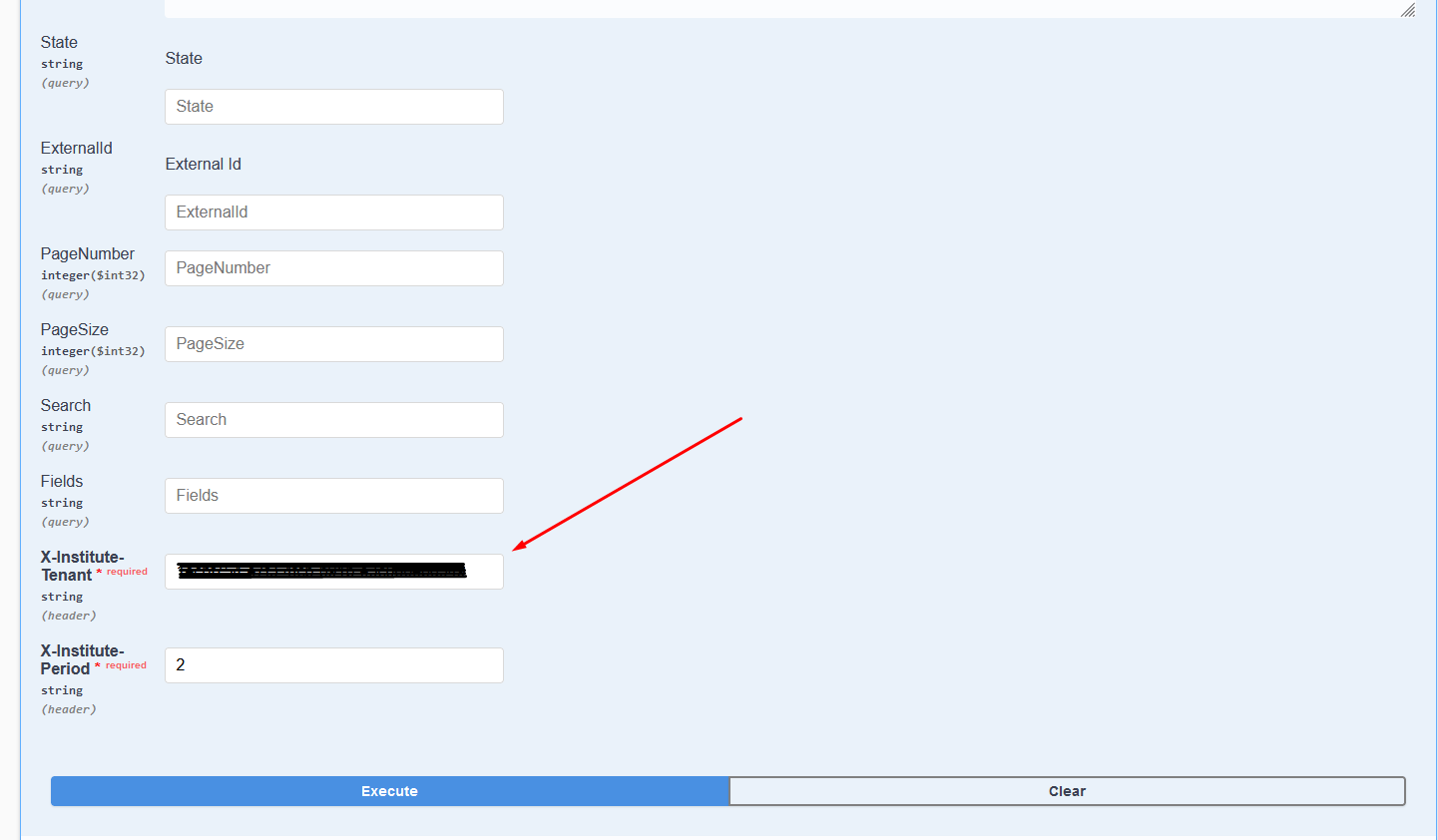
Clicking Execute initiates the call, and a Responses box appears below.
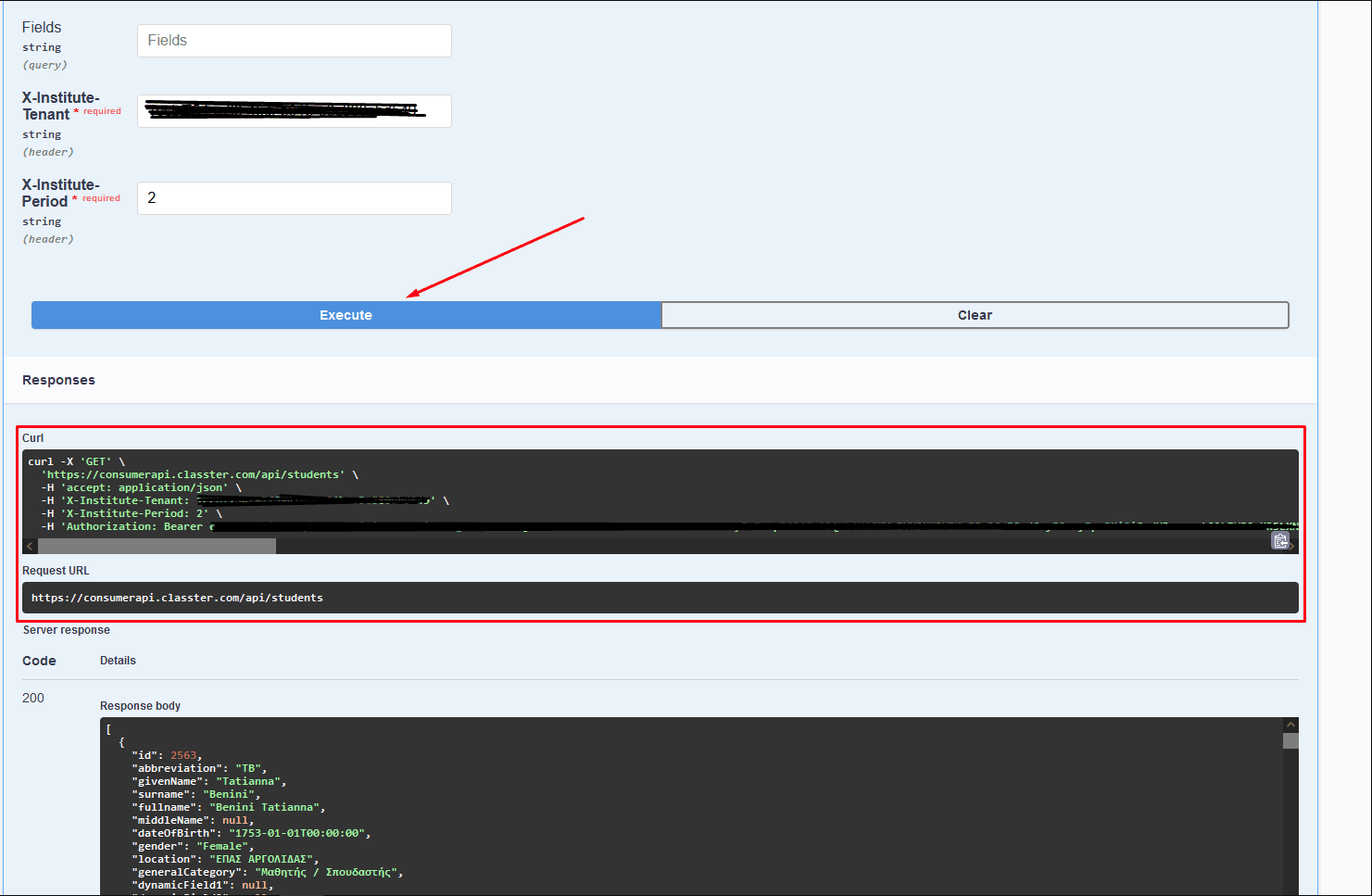
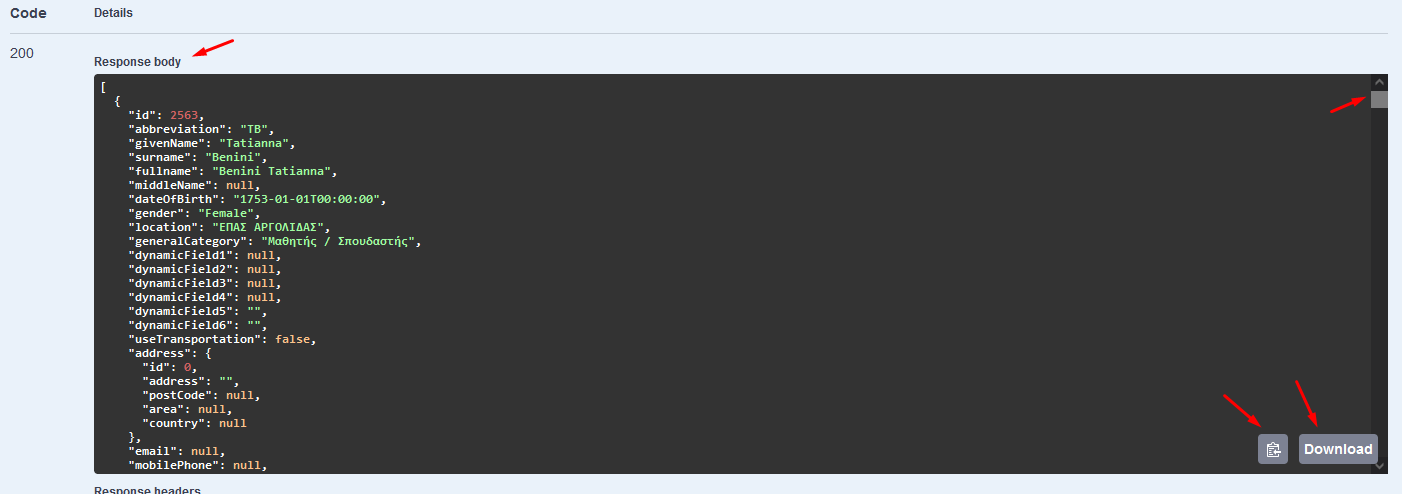
Below the Responses box is your Response Body — either the data you requested, or the status code returned by the call.
Frequently asked questions
Section titled “Frequently asked questions”Getting access and limitations
Section titled “Getting access and limitations”Is Classter Consumer Free to use?
Classter Consumer is only available in the “Advanced Configuration” license that Classter is providing through their subscription plans.
The site is asking me to sign in
Send an e-mail at support@classter.com to provide you with login credentials.
How to get a Bearer Token and a X-Institute-Tenant?
Send an e-mail at support@classter.com to provide you with Bearer and Institute Tenant.
Are there any rate limits or usage restrictions imposed by the API?
Many APIs have rate limits in place to prevent abuse and ensure fair usage among consumers. Rate limits define the maximum number of requests you can make within a specific time period. API providers may also impose usage restrictions based on factors such as authentication, data access levels, or pricing tiers. It's crucial to familiarize yourself with the API provider's rate limits and usage policies to avoid disruptions in your application and ensure compliance with their terms of service.
Is there a limit on the amount of data I can retrieve or upload using the API?
APIs often have limitations on the size or quantity of data that can be retrieved or uploaded in a single request. These limitations can be in the form of maximum payload size, maximum number of records, or other data-related constraints. It's important to review the API documentation or contact the API provider to understand any such limitations. This will help you design your integration to handle data within the specified limits and avoid issues such as performance degradation or rejected requests.
About the future
Section titled “About the future”Will the API I'm using be deprecated or replaced in the future?
APIs can undergo changes over time, including deprecation or replacement. API providers may release new versions or introduce alternative APIs that offer improved functionality, security, or performance. It's important to stay updated with the API provider's documentation and communication channels to ensure you are aware of any upcoming changes and can plan for the migration or adaptation of your integration.
What new features or enhancements can I expect from the API in the future?
API providers often strive to enhance their services by adding new features or improving existing functionality. This can include expanding data access, introducing new endpoints, supporting additional data formats, or providing more granular control over API interactions. Keeping an eye on the API provider's roadmap or release notes can give you insights into the upcoming features and help you plan your development efforts accordingly.
How will the API handle scalability and increasing usage in the future?
As an API consumer, you may be concerned about the API's ability to handle increased demand and scale effectively. Reliable API providers typically have strategies in place to ensure scalability, such as load balancing, horizontal scaling, and auto-scaling infrastructure. They may also have mechanisms to manage usage quotas or offer different pricing tiers to accommodate varying levels of usage. It's a good practice to discuss scalability considerations with the API provider or review their documentation for insights on how they handle increased traffic.
Will the API provider maintain backward compatibility in the future?
API providers understand the importance of maintaining backward compatibility to minimize disruptions for existing consumers. While some changes may necessitate breaking changes or deprecated features, reputable providers strive to provide migration paths or versioning strategies that minimize the impact on existing integrations. However, it's essential to regularly review the API provider's documentation and stay updated on any announced changes or deprecation to ensure a smooth transition and uninterrupted functionality in the future.
More questions?
Section titled “More questions?”Download PDF
Contact the Classter team